My Chinese Romanization Scheme
Pinyin Romanization has always been a system that bothered me, due to the frequency of mispronouncing Chinese names. While Pinyin is “efficient” in that it doesn't use many letters, the ways they are used are objectively unintuitive for anyone who uses a Latin alphabet and does not know Pinyin. (If you love efficiency, you could reduce “ng” to a single letter, but no one would ever do that…)
I believe Tongyong Pinyin, the old Taiwanese Romanization system, has the right instinct in trying to be intuitive to non-native speakers, who arguably should be the target audience for Romanization schemes. Adding back the reduced vowels from “ui” (uei), “iu” (iou), and “un” (uen) combinations is helpful for learners, as is q -> c (for example, the spelling “ciao” for “qiao” is already familiar to most English speakers).
My Romanization system mostly uses Tongyong Pinyin as a base. Compared to Pinyin, the following changes are made:
q -> c
x -> s
zh -> jh
i -> ih for “buzzing” vowel (zhi, chi, shi, ri, etc.)
iu -> iou
ui -> uei
Yu/yong after a consonant do not lose y (e.g. nü -> nyu)
ian/yan -> ien/yen. Pinyin “yan” and “ye” have the same vowel sound and therefore should be represented with the same vowel.
c -> ts. Intuitiveness of pronunciation.
uo -> o. This is mostly for simplification of spelling, does not apply to "wo".
No change to Pinyin “wen” or “weng” as exists in Tongyong.
Tones marked as in Pinyin, not Tongyong.
yi -> i (initial only). For proper pronunciation.
wu -> u (initial only).
Some reservations of Tongyong:
Personally I don’t love jh, it doesn’t look nice, but would result in more accurate pronunciation than zh.
Double-purposing “s” can be confusing, but there is already a lot of double-purposing in Pinyin and we are all just used to it.
“Cyu” (Pinyin “qu”) is not a nice-looking syllable. It is also a sound entirely foreign to English, as neither of those sounds exists in English, so I'm willing to accept it.
Samples
Chinese National Anthem
Cǐlái! Bù yuèntzò núlì dè rénmén!
Bǎ wǒmén dè syuěròu jhùchéng wǒmén sīndè chángchéng!
Jhōnghuá Míntzǔ dàoliǎo zuèi weisiěndè shíhhòu
Měige rén bèi pòjhe fāchū zuèihòudè hǒushēng
Cǐlái! Cǐlái! Cǐlái!
Wǒmén wànjhōng īsīn,
Màojhè díréndè pàohǒ, ciénjìn!
Màojhè díréndè pàohǒ, ciénjìn!
Ciénjìn! Ciénjìn! Ciénjìn! Jìn!
Cing Ye Sih - Li Bai
Chuáng cién míng yuè guāng,
Ǐ shìh dì shàng shuāng.
Jyǔ tóu wàng míng yuè,
Dī tóu sīh gù siāng.
Jiang Jin Jiou - Li Bai
Jūn bù jièn, huánghé jhīh shuěi tiēn shànglái, bēnlióu dào hǎi bù fù huéi;
君不见黄河之水天上来,奔流到海不复回。
Jūn bù jièn, gāotáng míngjìng bēi bái fà, jhāo rú cīngsīh mù chéng syuě.
君不见高堂明镜悲白发,朝如青丝暮成雪。
Rénshēng déyì syū jìn huān, mò shǐh jīn zūen kōng dueì yuè.
人生得意须尽欢,莫使金樽空对月。
Tiēn shēng wǒ tsái bì yǒu yòng, ciēnjīn sàn jǐn hái fù lái.
天生我材必有用,千金散尽还复来 。
Pēng yáng zǎi nióu ciě wéi lè, huèi syū yī ǐn sānbǎi bēi.
烹羊宰牛且为乐,会须一饮三百杯。
Tsén fūzǐh, Dān ciōu shēng, jiāng jìn jiǒu, bēi mò tíng.
岑夫子,丹丘生,将进酒,杯莫停。
Yǔ jūn gē ī cyū, cǐng jūn wèi wǒ cīng ěr tīng.
与君歌一曲,请君为我倾耳听。
Jhōng gǔ jhuàn yù bùzú guèi, dàn yuèn cháng zuèi bù fù sǐng.
钟鼓馔玉不足贵,但愿长醉不愿醒。
Gǔlái shèngsién jiē jìmò, wéiyǒu ǐn jhě lióu cí míng.
古来圣贤皆寂寞,惟有饮者留其名。
Chén wáng sī shíh yèn Pínglè, dǒujiǒu shíhciēn zìh huān syuè.
陈王昔时宴平乐,斗酒十千恣欢谑。
Jhǔrén hé wèi yén shǎo cién, jìng syū gū cyǔ duèi jūn jhó.
主人何为言少钱,径须沽取对君酌。
Ǔ huā mǎ, ciēnjīn cióu,
五花马、千金裘,
Hū ér jiāng chū huàn měijiǒu, yǔ ěr tóng siāo wàn gǔ chóu.
呼儿将出换美酒,与尔同销万古愁。
Perso-Arabic Script for Spanish

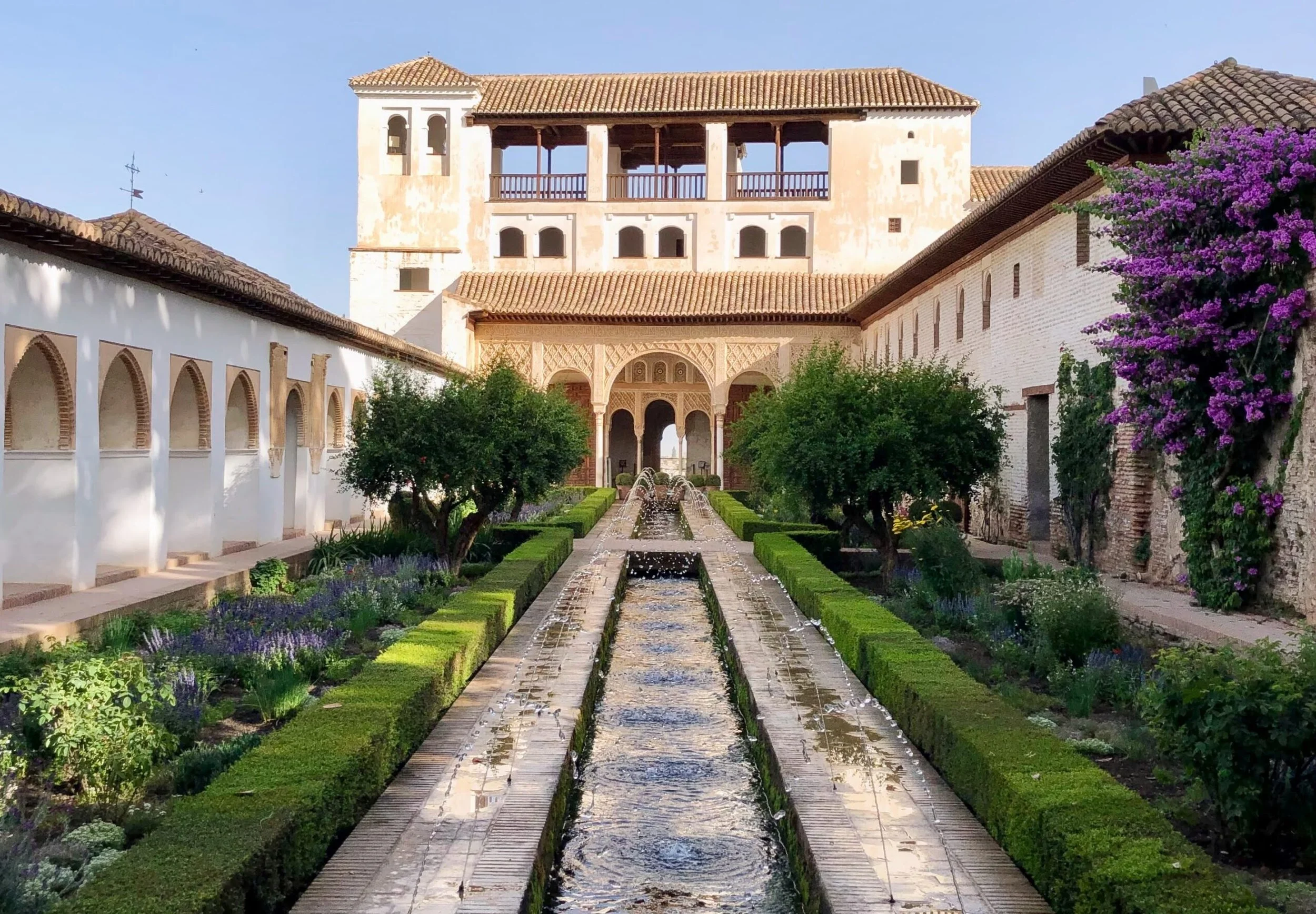
Alhambra, Spain آلامبرا اسپانّا
This is a system for writing the modern Spanish language in Perso-Arabic script. Centuries ago, people used to write Old Spanish using an Arabic adaptation called Aljamiado. The following is an improvement since it uses modern consonant sounds and sound mergers, and also because it derives its vowel system from Persian, which is an Indo-European language, like Spanish, but it uses the Arabic script natively. Like Persian, Spanish also does not have an inherent need for changing the vowels within a root in the way Semitic languages do, so it makes more sense to write out (most of the) vowels explicitly, making the system more of an alphabet.
I chose Spanish because English is not well suited to be written elegantly in the Arabic script. Spanish, on the other hand, has fewer vowels, some Arabic influence, and it has the letter Z pronounced variably as /s/ and /th/, just like the letter ث.
Consonants
| Letter | Spanish Equivalent |
|---|---|
| ب | b, v |
| ث | Soft c, z |
| ک | Hard c, qu |
| ج | ch |
| د | d |
| ف | f |
| خ | Soft g, j, x |
| غ | Hard g, gu |
| N/A | h |
| ل | l |
| لّ | ll |
| م | m |
| ن | n |
| نّ | ñ |
| پ | p |
| ر | r |
| رّ | rr |
| س | s |
| ت | t |
| ی | y |
Vowels
| Letter | Spanish Equivalent |
|---|---|
| ا, آ | a |
| ه (always with ZWNJ) | e |
| ی | i |
| و | o, u |
The vowel system is based on Persian. a, i, u are always indicated. Diphthongs are written out as two vowels.
Alef marks a word beginning with a vowel. If the word begins with "a", the alef-ba-kolah آ is always used. Words beginning with e are written with only alef. Words beginning with i, o, or u are written as alef + the vowel (e.g. اوتروس otros, اوستد usted)
o: indicated if the syllable is stressed, or in the last syllable ending in itself, s, or n. An exception is made for "con" since it's a common word.
como: کومو (both o's written. The first o is open and stressed, the second is final)
los: لوس (o written, ends in s)
conmigo: کنمیغو (only second o written as it's final. First is not written because it's not stressed)
e: not indicated unless the syllable is open and stressed, or the last letter of the word.
Samples
Uno dos tres cuatro cinco seis siete ocho nueve diez
اونو دوس ترس کواترو ثینکو سهیس سیهته اوجو نوهبه دیهث
En el principio existía la Palabra y la Palabra estaba con Dios, y la Palabra era Dios.
ان ال پرینثیپیو اکسیستیا لا پالابرا ای لا پالابرا استابا کن دیوس٫ ای لا پالابرا ارا دیوس
Todos los seres humanos nacen libres e iguales en dignidad y derechos y, dotados como están de razón y conciencia, deben comportarse fraternalmente los unos con los otros.
تودوس لوس سرس اومانوس ناثن لیبرس ا ایغوالس ان دیغنیداد ای درهجوس ای٫ دتادوس کومو استان ده راثون ای کنثیهنثیا٫ دهبن کمپرتارسه فراترنالمنته لوس اونوس کن لوس اوتروس
Porque tanto amó Dios al mundo que dio a su Hijo único, para que todo el que crea en él no perezca, sino que tenga vida eterna.
پرکه تانتو آمو دیوس آل موندو که دیو آ سو ایخو اونیکو٫ پارا که تودو ال که کرها ان ال نو پرثکا٫ سینو که تنغا بیدا اترنا
Fixing NFL Uniforms

The Cleveland Browns uniform redesign in 2020 follows all of the design principles mentioned below, and looks great as a result.
It’s no secret that the attractiveness of NFL uniforms is not what it was in its golden age from the 70’s to the early 90’s. Although a recent resurgence in throwbacks calling to that time period has improved the look of the league, and we have exited the Reebok “dark ages” of the early 00’s, Nike’s new uniforms still exhibit some worrying design trends.
The good news is, with a few simple mandates, the league can once again resemble the aesthetic of the golden age:
Require primary combinations to have non-matching colored jerseys and pants (if not white)
In the early Super Bowl era, it was rare to see mono-combinations of non-white jerseys and pants. This became more and more common throughout the 2000’s, culminating in the unpopular Color Rush.
Several teams have rolled out primary home combinations that are comprised of just one color, including the Patriots, Seahawks, and Saints, among others.
Generally, mono-combinations provide much less visual intrigue than contrasting combinations, and oppose the “traditional” NFL look. Increasing the amount of mono-combinations will cheapen the aesthetic character of the league.
Since some of these mono-combinations are popular (Steelers and Chargers color rushes, for example), they should still be allowed as alternates.
Require stripes on all pants
Stripeless pants seem to be the latest minimalist trend by Nike in reaction to the cluttered and loud designs they rolled out in the 2010’s.
These also cheapen the league’s aesthetic image. What is the point of a pro sports uniform if you can buy it at a sporting equipment store? It’s boring and decreases team recognizability — leave the stripeless pants to college.
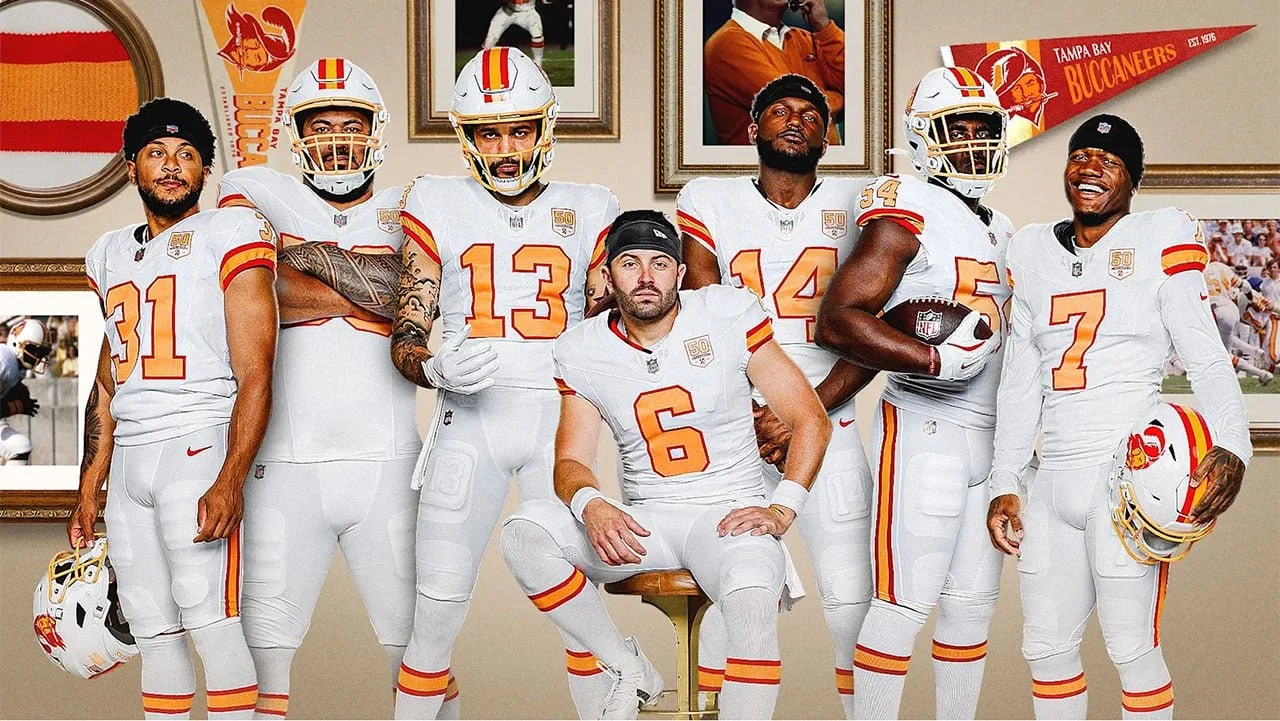
Require socks to be part of the uniform
Socks in the NFL used to have two layers, where the top layer was usually team-colored and could have some kind of stripe or pattern.
This builds more visual contrast within the uniform, especially if the socks and jerseys match, and contrast with the pants.
If the socks also have stripes that match some other design element in the uniform, it increases the harmony of the set.
Nowadays, the two main issues that happen a lot are mismatched socks between teammates, which looks very unprofessional, or plain white socks with plain white pants, creating what looks like an unfinished uniform.
With these three simple changes, the worst offenders of bad uniform design trends can be stamped out entirely, forcing teams to default to making good uniform decisions.